
What is distributed inventory?
Distributed inventory places products in several locations so orders travel less, arrive faster, and cost less to ship. The approach exists because online orders now spread across regions, and shipping everything from a single warehouse gets slow and expensive as the distance to buyers grows.
The stakes are real when stock sits in the wrong place. The global retail industry loses $1.73 trillion a year to inventory distortion, about 6.5% of global retail sales, according to IHL Group inventory distortion research (Sept 2025). Spreading stock closer to demand is one way businesses manage multi-location inventory and keep the right products within reach of the customers who buy them.
Key characteristics
- Multiple stocking locations: Stock is held across two or more warehouses, distribution centers, or fulfillment centers instead of one hub. If the difference matters for your setup, see distribution center vs. warehouse.
- Order routing by proximity: Each order is fulfilled from the location nearest the customer to cut transit time and shipping zones.
- Real-time, location-level visibility: The business must know how much of each item sits at each site, which requires software that tracks inventory by location.
- Regional demand allocation: Stock levels at each site reflect that region’s demand, so fast-movers sit where they actually sell.
- Executed in-house or via 3PLs: Companies run their own sites or use third-party logistics (3PL) partners, a choice covered in 3PL vs. in-house fulfillment.
Example
Picture a direct-to-consumer cold-brew coffee brand that sells nationwide. Instead of one warehouse, it splits stock between an East Coast site and a West Coast site, so most orders ship a shorter distance and arrive in two to three days at standard rates. That split is one of several ecommerce fulfillment methods a growing brand can lean on.
Online shoppers abandon about 70% of carts, and among those with real purchase intent, 20% leave because delivery was too slow, per Baymard cart abandonment research (Baymard Institute, 2025). Shipping from a nearby site speeds delivery and helps prevent those lost sales.
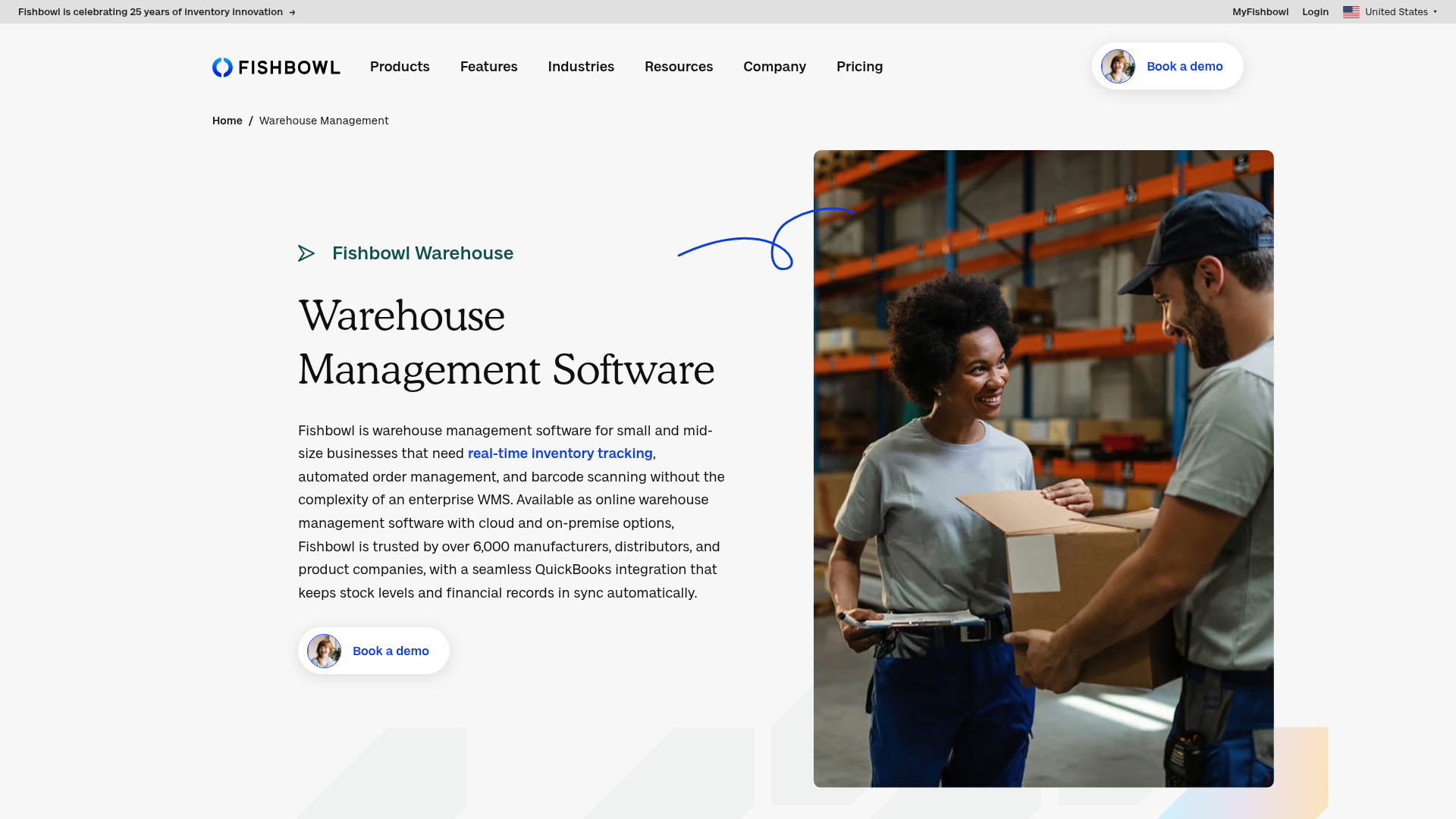
Caption: Fishbowl’s warehouse management software tracks inventory by location across multiple sites. Source: Fishbowl.
Related terms
- multi-location inventory management
- multichannel inventory management
- warehouse inventory management
FAQ
What is the difference between distributed and centralized inventory?
Centralized inventory keeps all stock in one location, which is simpler and cheaper to manage but often means longer, pricier shipping; distributed inventory spreads stock across sites for faster, cheaper delivery at the cost of more coordination.
Does distributed inventory make delivery faster?
Yes, shipping from the nearest site shortens distance and shipping zones, which speeds delivery and lowers cost, and it fits buyer patience, since a 2025 McKinsey consumer delivery survey found 90% of US consumers will wait two to three days for delivery to get free shipping.
When does distributed inventory make sense?
It makes sense when your order volume, geographic spread, and delivery-speed expectations justify the added coordination and carrying cost of running multiple sites. Fishbowl’s warehouse management software gives operators the location-level visibility that a distributed setup requires.