
What is demand planning software?
Demand planning software connects sales history, inventory, and supplier data so teams can plan ahead instead of reacting to shortages.
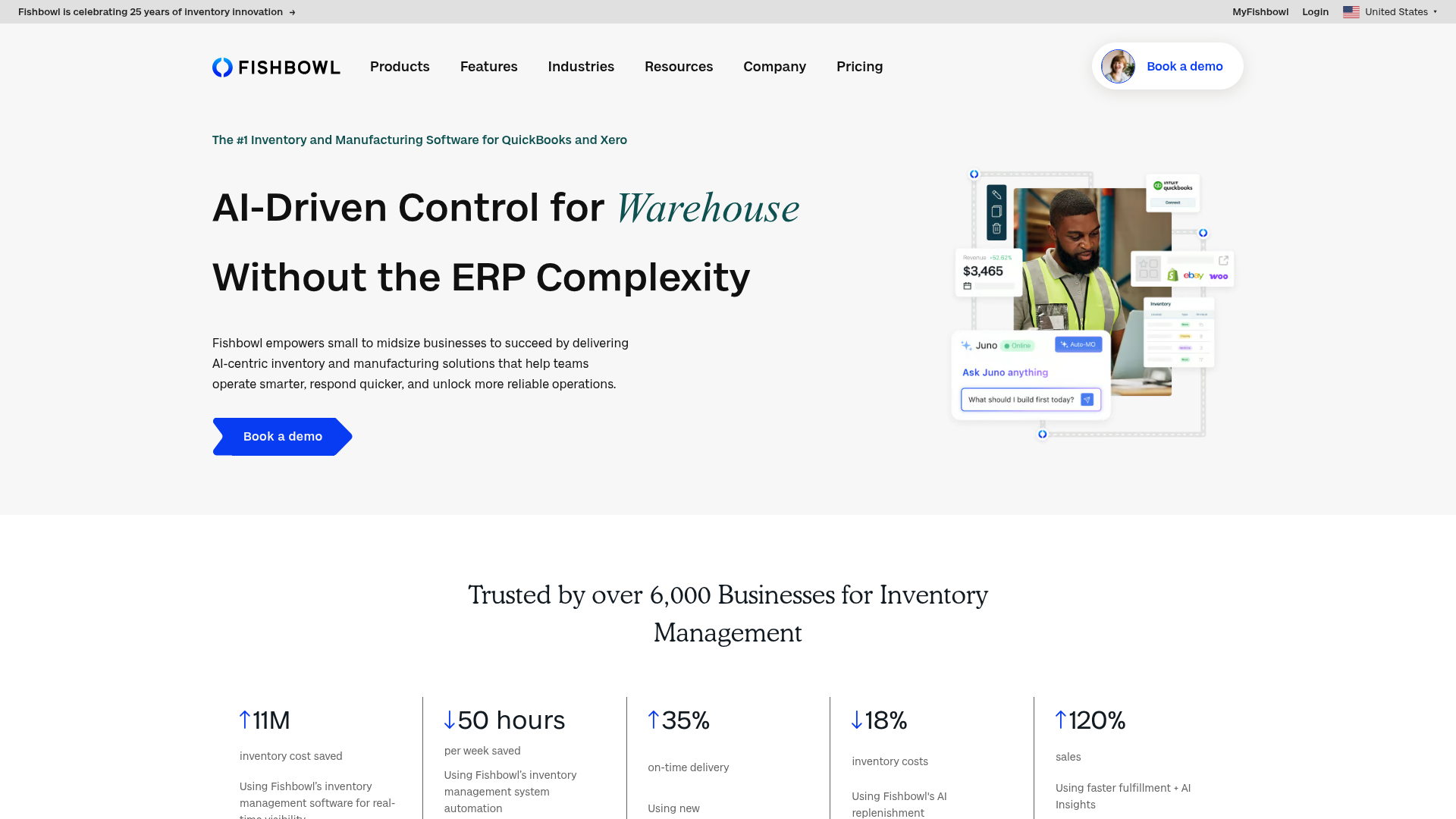
Caption: Fishbowl’s inventory and manufacturing platform brings demand, inventory, and purchasing into one view. Source: Fishbowl.
Spreadsheets and gut-feel forecasts break down when demand swings and supplier lead times shift. The software fills that gap by reading live data and building a forward plan you can act on.
It builds on demand forecasting, the prediction of future demand. Demand planning adds the next step: deciding what to stock, buy, and build so you set targets before a shortage or an overstock happens.
Key characteristics
- Demand forecasting: predicts future demand from past sales, seasonality, and market trends. Every tool in this category covers this baseline.
- Replenishment signals: converts the forecast into reorder points and order quantities so buyers know when to place a purchase order (PO).
- Safety stock: sizes a buffer that absorbs demand swings and supplier lead-time variability.
- Real-time data and integrations: syncs sales, inventory, and accounting data so the plan reflects what is happening right now.
- AI and machine learning (ML) assistance: modern tools apply AI-driven forecasting to sharpen accuracy, though a person still reviews and approves the plan. McKinsey (2024) found AI can reduce inventory levels by 20–30% in distribution operations by improving demand forecasting.
Example
Koken USA, a Fishbowl customer, cut freight costs 7% through optimized, demand-forecasting-driven planning. Cleaner plans meant fewer rushed shipments and steadier ordering.
Good planning also helps a business prevent stockouts before they cost a sale. The stakes are large: global retail inventory distortion (out-of-stocks and overstocks) reached $1.7 trillion in 2026, equal to 6.2% of global retail sales, per IHL Group.
Related terms
- reorder points: the inventory level that signals when to place a new order.
- safety stock: the buffer stock kept on hand to cover demand and supply variability.
- inventory optimization: the practice of holding the right amount of stock across every location.
FAQ
What is the difference between demand planning and demand forecasting? Forecasting predicts how much customers will buy, while demand planning uses that forecast to decide what to stock, buy, and build.
Who uses demand planning software? Planners, buyers, and operations teams at product businesses use it, including manufacturers, wholesalers, and retailers that manage inventory.
Does demand planning software use AI? Many modern tools apply machine learning to improve forecast accuracy, and a person still reviews and approves the final plan.