
What is deadstock?
Deadstock is unsold inventory that a business is unlikely to sell, even at a lower price. It sits on shelves after its selling window has closed.
It matters because it locks up money you could spend elsewhere. It also fills warehouse space and pulls staff time toward products that no longer bring in revenue.
The word can confuse people. In inventory management, deadstock means unsellable stock. In sneaker and streetwear resale, “deadstock” means brand-new, unworn items in original condition that often sell at a premium.
The scale is large. According to the IHL Group 2026 inventory distortion study, inventory distortion (out-of-stocks plus overstocks) reached $1.7 trillion globally in 2026, and overstocks, the category deadstock belongs to, make up 34.4% of that distortion.
Key characteristics
- Unlikely to sell: the stock is not just slow-moving; there is little realistic path to a full-price sale because it is expired, out of season, obsolete, or defective.
- Ties up capital and space: an AlixPartners excess inventory analysis found interest costs for retailers rose 40% and warehouse labor rates rose 13% since 2021, making unsold stock costlier to hold.
- Distinct from obsolete inventory: deadstock may still move at a discount, but managing obsolete inventory means stock that can no longer be sold or used as intended.
- A subset of excess inventory: overstock that never sells turns into deadstock, so reducing excess inventory early helps prevent it.
- Prevalence benchmark: peer-reviewed dead stock research in the journal Sustainability (2025) notes that 20–40% of inventory in general manufacturing and retail is typically classified as non-moving or dead stock.
Example
A clothing retailer overbuys season-specific winter coats. When spring arrives, the unsold coats no longer sell at full price and become deadstock.
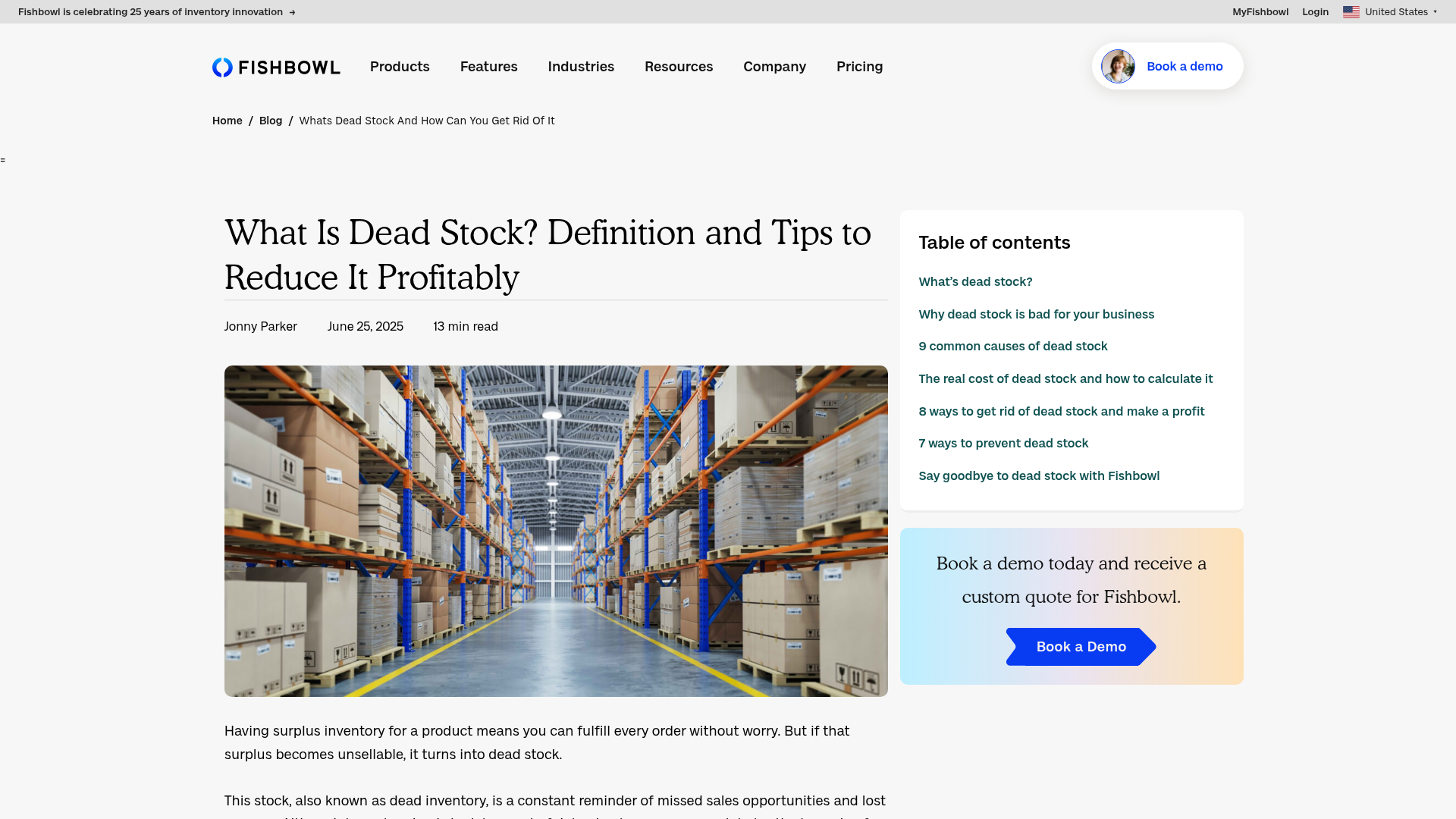
Fishbowl’s guide to spotting and clearing dead stock before it drains your margins. Source: Fishbowl.
Faster markdowns and better planning keep it from stacking up. Extract Production, a Houston oil-and-gas services company, saved $11 million in inventory costs with Fishbowl and reports that excess inventory “is a thing of the past.”
Related terms
FAQ
What is the difference between deadstock and obsolete inventory?
Deadstock may still move at a discount, while obsolete inventory can no longer be sold or used as intended.
What causes deadstock?
Common causes include overordering, inaccurate demand forecasting, seasonality or trend shifts, and product quality issues.
Is deadstock the same as “deadstock” sneakers?
No; in inventory it means unsellable stock, but in sneaker and streetwear resale it means brand-new, unworn items that often sell at a premium.